Background
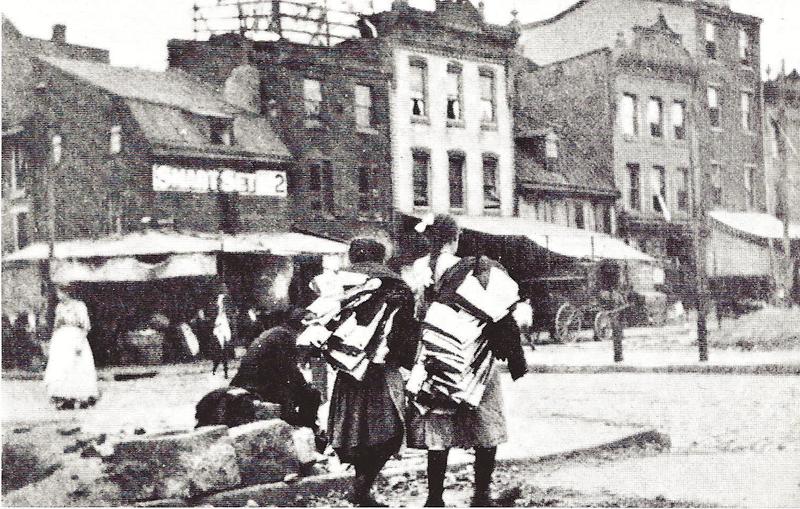
Anna Lavin came with her family from Russia to Philadelphia in 1896.
Анна Лавин приехала с семьей из России в Филадельфию в 1896 году.
They landed at the immigration station at the foot of Washington Avenue. She settled in South Philadelphia with her family and started to work at the age of twelve. Lavin worked for 53 years in the garment (clothing) industry. What began as a life of poverty, developed into a life of appreciation and resilience (strength).
Immigrant Perspective
Anna reflects that her family was poor, but that it was easier to accept because so many people were poor.
“I really enjoyed life, always, always. Well of course we didn’t know any better. Nobody had any more than we did. If they had another slice a bread, we had enough.”
Child Labor Experiences
Each week, Anna’s father brought home $6 while she brought home $4 as a 13-year-old worker. This $10 each week paid for the rent and food of the two adults and six children of the family. Anna’s family lived under the confines of poverty; only buying what could be payed for with cash. She explains how with dedicated saving of the nickel trolley fare, the family could eventually buy furniture to sit on:
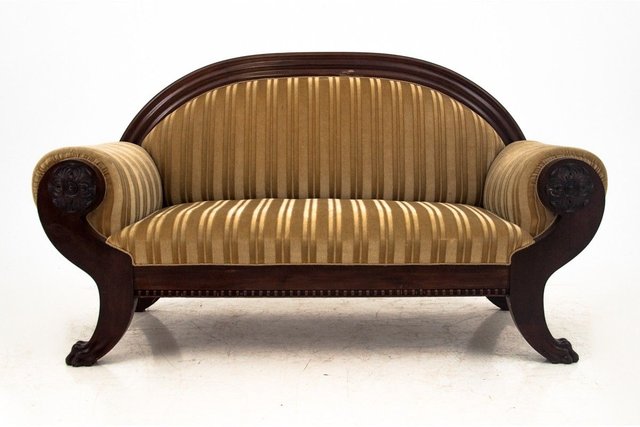
it looked like heaven.”
Important Object #1
“But then we saved for whatever we had bought. I worked at that time- Broad and Reed. And on the way home, we walked of course. Even though it was only a nickel fare, we didn’t have that nickel. And we saved that up. And there was a beautiful- to me- a beautiful living room set. We had an empty room and it was in the window. It was marked $10. We came home, we had little safe, opened it up and we had a little over $10. And my mother and I walked up there to see whether it would be suitable. It was marked $10. And I shook in my boots- maybe that would be sold by the time we got there. That was on Broad Street. I had a little over $10 and the man, he was afraid that we were going to back out. He loaded the furniture- he loaded it on a push cart and took it over to the house. I was so glad that nobody was out to see that we’re buying furniture at night that was coming in. Why? Just because when they looked in the window, they saw that there was an empty room. People looked in windows too, then. And saw an empty room and ‘oh, they don’t have anything.’ By then I knew that people had more than we did. We polished it up and oh, and that room looked like heaven. We had a whole room of furniture!”
Cultural Traditions

The Lavin family encouraged their six children to “Americanize” but maintained their Jewish faith.
Q: “Did your father or did your parents have any desire for you to grow up or to remain basically a Russian Jew to carry on the traditions? A: “No, well we, only the Jewish religion.” Q: “Did they encourage you to ‘Americanize,’ to dress…?” A: “Oh, sure, to go to school as much as we could. And the Hebrew literature society was across from the Mount Vernon school I went, that’s where I went and I would take out books. I didn’t know what I was reading, but I read!”
Challenges
The living conditions among the poor immigrant neighborhoods were crowded and unsanitary. All of the Lavin children slept in the same bed and when one became sick, often the others followed. Everything was cleaned with the same bar of soap.
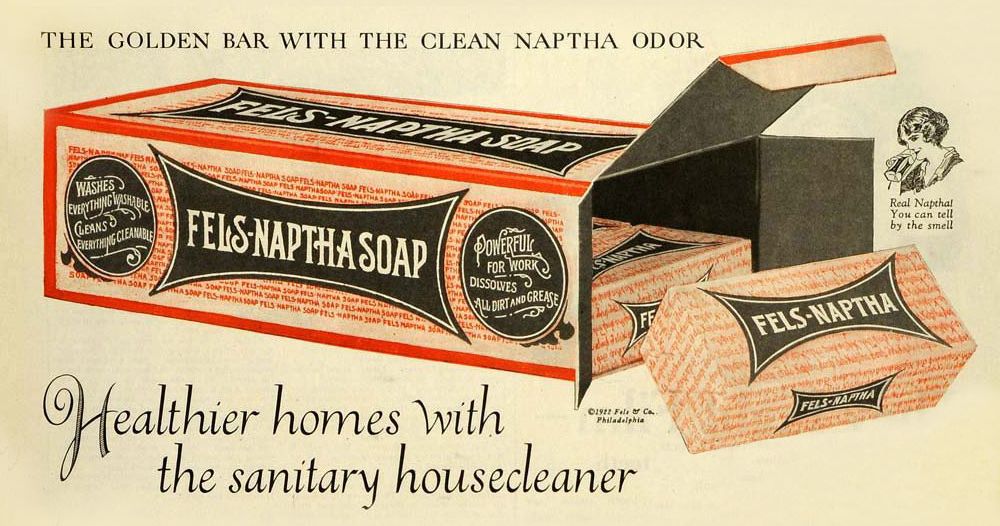
Fels & Company of Philadelphia around 1893.
“Everybody had lice, because we were living so crowded. And, as I say, we had a bath every Friday afternoon. The water was drawn from a tap. We were lucky we had a tap and not a hydrant down in the yard to drag water in. The washing up was put up in the living room, kitchen, whatever you wanted to call it, bedroom, it was all a combination of all and we each as we came in took a bath, got fresh clothes for the sabbath, and dressed, and had our hair washed, fine combed. And soap? We used one kind of soap, floor soap- we had to use that! And no covered floors- wooden, whatever the flanks were. First one home- had fresh water! The rest? One after the other. Q: Did you all have lice? A: Oh sure. We had our hair washed. Well, everybody in the school brought them home too. If you rubbed shoulders with anybody, naturally. It was a ‘lousey’ time.”
I went to escort my aunt to the public baths. And that I don’t remember- It was very very cheap. Of course children were admitted free. I enjoyed those baths very much. Except that I was very shy and that everybody was sitting around naked. I was embarrassed but after all somebody had to go with my aunt. They went and it was very cheap. I don’t remember- it was 5 cents or 10 cents, it included towels and plenty of hot water.
Anna explains how the poverty was so extreme that there was no theft.
“Theft? Oh no, who closed doors? Summertime you needed the air!”
And yet, she also explains how this level of poverty meant that she did not have a real childhood:
I went to sewing class on Sunday. It was run by the Jewish organization. They were giving out Hanukkah dolls. Oh, I saw the most gorgeous dolls there sitting in the chairs. And when it came my turn to get a doll they looked at me and thought ‘oh I guess she looks too old.’ So I got a pair of stockings, a box of candy, and orange, and something else. You know I didn’t touch that stuff and I cried. I wanted a doll so bad! Never had a doll. But I saw to it that the other kids had dolls.
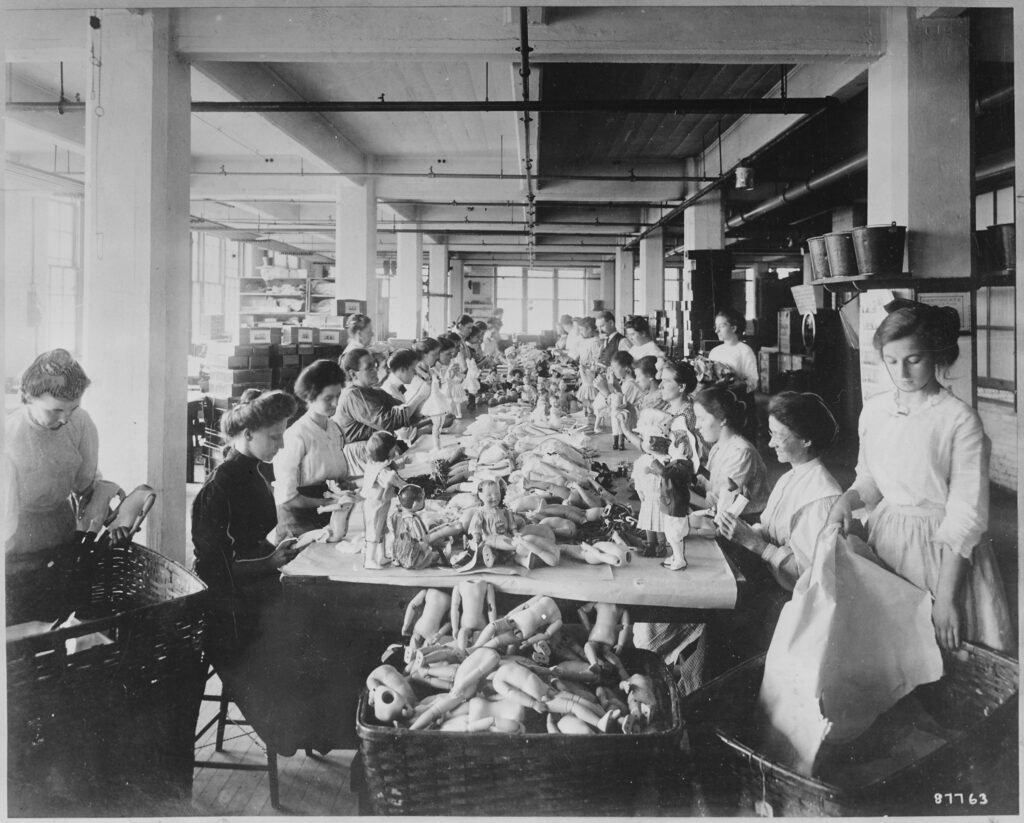
Public domain, via Wikimedia Commons
Important Historical Event
Anna’s family also had experience with quarantine during the flu epidemic.
Q: What did quarantine mean? A: “They put a sign on the door- nothing to go out or to go in. Just necessities.”
Schooling
“I didn’t know a word of English of course. I knew a little Russian then, but I forgot everything about it. Q: Did your parents continue to speak Yiddish in the home? A: Oh yes and I don’t know whether I told you my father studied English in Russia so he would know what to talk about. His English was terrible! He always said, ‘they understand me.’ And we was right, they understood him. I was lucky I had a few years of schooling until I was 12.“
Fun Pastimes and Hobbies
Anna and the children of the street found relief from their work with a good game of “stick ball” and telling one another ghost stories.
Important Object #2
Because Anna was the oldest, she needed to help work to support her family. She thinks back to sadly not having much of a childhood. But when she is older, saving for her first record player is a source of immense pride. She saves for a year and buys her first record player and a record by Louise Holmer.
