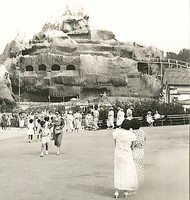
Gilda Cetrullo was 20 when she left Abruzzi, Italy to join her parents in Philadelphia in 1923.
Gilda Cetrullo aveva 20 anni quando lasciò l’Abruzzo, in Italia, per raggiungere i suoi genitori a Filadelfia nel 1923.
First Impressions of Philadelphia
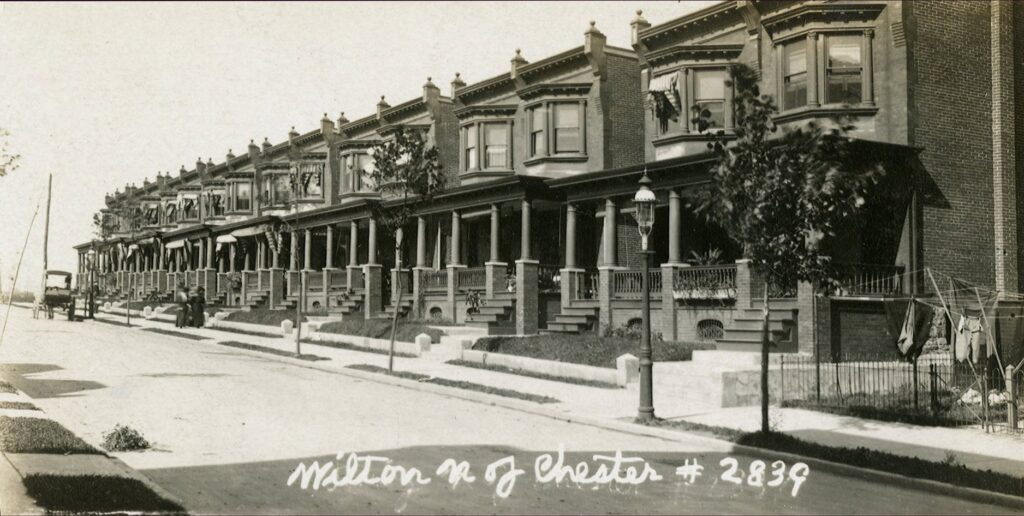
In the summer of 1923, Gilda arrived to Philadelphia. She was greeted by her family that had already migrated years before her. Gilda had a wide range of first impressions of Philadelphia, but what stood out to her most was the architecture of the city. The city was filled with similar row homes, which was different from what Gilda experienced in Italy. Gilda disliked this about Philadelphia because it took her longer to find places.
“It was a trash day, a very hot and muggy day. Me coming from a place where there was always a breeze, well, it made me very sad. I thought ‘Wow, what a dirty city when I see all those baskets, those days they didn’t have plastic bags everything was in containers’. Well that’s when I met my mother, who I didn’t even remember after 17 years. I remembered my older brother and older sister, but then there were three other children American-born.”
Q: Can you tell me any of your other initial impressions of this city?
The trouble I had on the trolley car I couldn’t find my home. All the homes were alike…I used to have all separate homes; a single home with gardens around.
Education
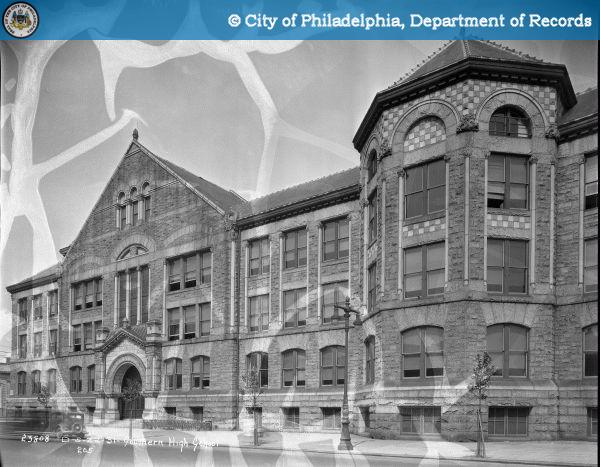
South Philadelphia High School, built in 1907
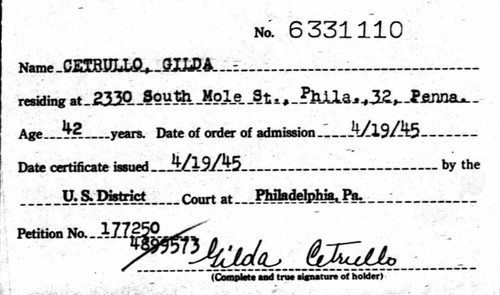
Gilda attended South Philadelphia High School, where she and other immigrants were taught the basics of American Culture and language. Gilda said that the first thing she was taught was ” have you job for me” ( 9.26). With those words Gilda was able to get a job at a local dress shop in Philadelphia.
Q: Any American history or Civics? Or was it purely language?
“No, it was how you learned about the government, civics yes it was civics. All those things that we learned.”
Work Conditions
Gilda reflects on the ideal of work. Gilda was motived to work because she wanted to gain money to go back to Italy. Gilda’s family didn’t expect her to get a job, however she wanted to. Gilda first went to school in order to learn the language to get a job. During the 1920’s Gilda found a job as a dress maker in downtown Philadelphia. During her first week Gilda earned only nine dollars however as she approved she made more money.
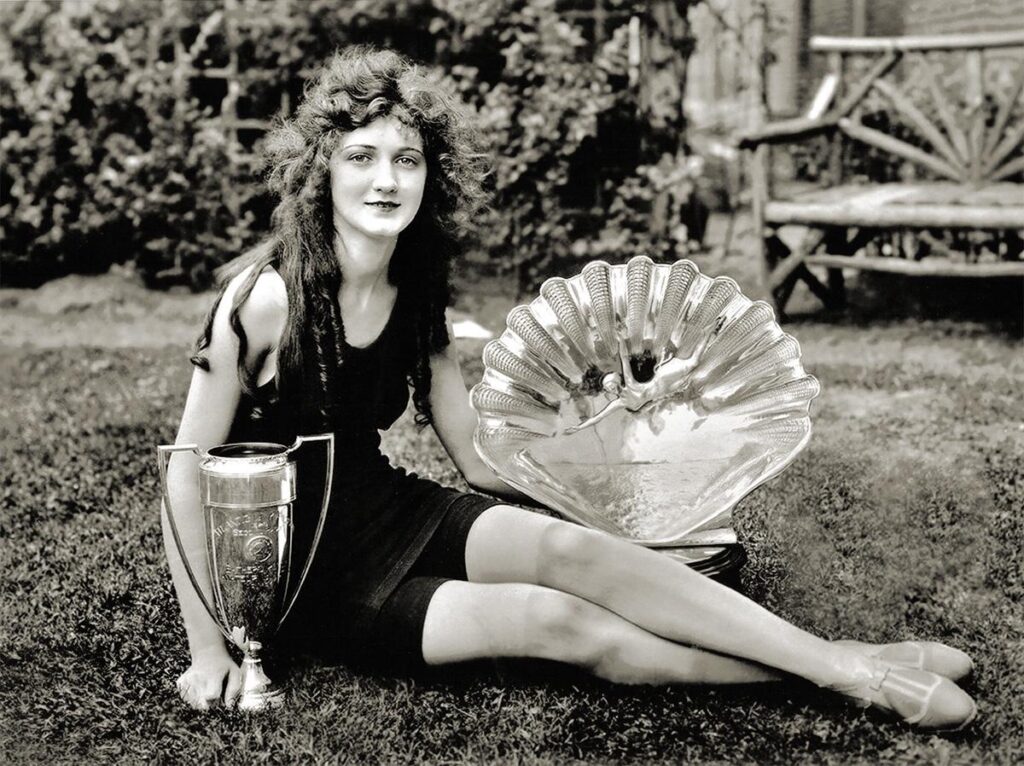
Miss Philadelphia 1923 and Miss America 1924
The shop that Gilda worked at made the dress for Miss America 1924, Ruth Malcomson. This lead to a boost in sells for their shop and kept them super busy. Soon after this Gilda revealed that the dress makers wage was cut and without a Union, Gilda and her co-workers walked out of the dress shop. They came to a compromise to keep the dress makers happy as well as the store owners.
Gilda’s life through a Historical Event
Gilda moved from Philadelphia to New Jersey many times. Gilda and her family moved back to Philadelphia for the last time once the Great Depression hit American economy. Gilda was able to get a job as a hand knitter when she returned to Philadelphia. During the Great Depression Gilda was able to supply her family with only 13 dollars a week for 4 people.
Gilda stated that the Great Depression didn’t impact her that much because of how she was raised. Her parents raised her to save so she was able to stretch the income she earned. Gilda expressed how she enjoyed making clothes for her children as way to save money.
“On me it was this way, I was raised with plenty and always thought I had nothing. It didn’t hit me that much because I was raised in a way you were supposed to save. I was always careful with expenditure. I learned how to do things, like making shirts and pants for my children. My children always looked nice, but you can not go to movies anything entertaining was completely out.”
Culture
Gilda talks about her return to Italy almost 50 years after she first immigrated to America. Gilda enjoyed her return to Italy, she went back to mainly see her cousins and other family members. She went back to visit Italy many more times, she even took her grand daughter to allow her to connect to her roots.
“I went with my Sister-in-law and my 2 friends, and I really had a ball there. I still have 14 living first cousins, only my mother and father came to America. I was there I traveled because my family was scattered I had some in Milan, Florence, Rome and of course some in Abruzzo.”
Q: But you preferred to stay in America to live?
“Oh Yes, well my children were here. My husband was here. My mother and father were here. My sisters and brothers were here. My roots were here.”
